Wine related articles
Professor makes model for less expensive wine
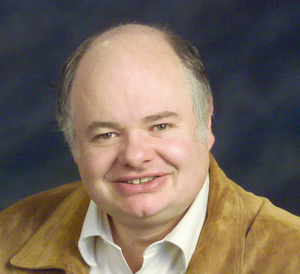
CMU professor Lorenz Biegler created a computer model that could lead to cheaper wine.
Turning water into wine? Not quite, but a CMU professor may soon be able to create $500 flavor in a $10 bottle of newly-fermented wine.
Working in conjunction with the Pontifical Catholic University (PCU) in Santiago, Chile, chemical engineering professor Lorenz Biegler is currently modeling the yeast process using computers here at CMU. One possible byproduct of his research may be better-tasting, cheaper wine.
Biegler joined the project in 2002 when Dr. Ricardo Correa of PCU approached him for his help.
“He came to visit over the summer and told me about his work,” he said. “We started discussing optimization, and that’s how things started.”
Traditionally, the determining factor of a wine’s taste is its age: Over time, wines mellow and become more fruity. This is due to the interplay of tannins, sulfites, and acids unique to each vintage.
How a wine will age, though, depends not only on the vines from which it is grown, but also on complex chemical reactions that occur in the yeast process. Sometimes the reactions can go awry, halting fermentation.
“Dr. Correa told me that some of the wineries in Santiago were having problems with fermentation, and that last year 40 percent of the fermentations were lost because of stoppages,” Biegler said.
Biegler believes that by modeling fermentation, these reactions can be better controlled and made more reliable. His goal is “to eventually control inputs, such as sugar or temperature,” in the hopes of regulating outputs, improving taste, and reducing manufacturing waste.
Much of his past work has involved system modeling, and he says that his current interest is with mathematical efficiency more than anything else. “It’s an optimization problem, and that’s what I’m concerned with,” he said.
Modeling is already commonly employed in the petroleum and pharmaceutical industries to maintain quality control and cut costs.
However, it has made little inroads in the field of winemaking, due to the sheer complexity of the organic system.
“So far, most of the work has been in fitting models to data, rather than creating entire systems,” he said.
Modeling the yeast system is proving to be quite a challenge: A recent paper published by his group lists 40 simultaneous reactions — only a fraction of the true number.
Understanding the yeast process will go a long way toward improving the archaic and haphazard methods of quality control currently employed.
For instance, in California, it is common for grapes to be harvested later, and for water to be added during fermentation to regulate alcohol content. Other wineries routinely add sugar during fermentation to sustain the process and improve taste.
Biegler is confident that his team will be able to unravel the chain of reactions, helping wineries around the world more effectively control the different steps of fermentation.
System optimization is nothing new to Biegler, who last year helped the U.S. Department of Agriculture create a network for monitoring contaminants in bodies of water.
“The problem in this system is that there are thousands of nodes,” he said, pointing to a diagram of a municipal water network.
In fermentation the situation is similar, as there are hundreds of simultaneous reactions that must be accounted for. To analyze large volumes of data, Biegler and his colleague Correa developed software based on the well-known package Matlab.
IBM has taken over future development of CMU’s software, while Correa’s contributions have been made available online for other researchers to use.
Biegler’s two-year collaboration with PCU has already proved fruitful, and may soon translate into cheaper wine and a better understanding of one of nature’s fundamental processes.
1,2,3,4,5,6,7,8,9,10,11,12,13,14,15,16,17,18,19,20,21,22,23,24,25,26,27,28,29,30
31,32,33,34,35,36,37,38,39,40,41,42,43,44,45,46,47,48,49,50,51,52,53,54,55
56,57,58,59,60,61,62,63,64,65,66,67,68,69,70,71,72,73,74,75,76,77,78,79,80,81